


Net Zero
Digitally accelerate towards Net Zero
Net Zero
Under the famous 2015 Paris Agreement, 196 parties agreed to a shared ambition of limiting global warming to well below 2°C above pre-industrial levels, preferably to 1.5°C only. The goal was to reduce the impacts of climate change significantly. This has become a guiding principle for countries, cities, financial institutions, and companies across the globe to transition toward the Net Zero. Net Zero implies not having an incremental contribution to the amount of greenhouse gases in the atmosphere. This can be achieved by reducing emissions as much as possible and offsetting the remaining emissions by removing an equivalent amount.
Post Paris agreement, at COP26, the year 2050 was benchmarked as a year to attain carbon neutrality. Based on their current GHG emissions scenario and future roadmap, countries, and companies have already started pledging their Net Zero year.
Such ambitious targets require nothing less than a complete transformation of how companies produce, transport, and consume energy. The consensus to reduce carbon dioxide (CO2) emissions to Net Zero generates considerable environmental optimism, but the strategy required to reach the same is still poorly defined across industries. Companies struggle to identify the roadmap for Scope 1/2/3 emissions reduction and track/check the GHG emissions across their value chain.
LTIMindtree’s rich domain expertise and smart connected offerings help organizations achieve their Net Zero targets.
Net Zero Strategy/Roadmap
Consulting/Advisory services to define Strategy, Goal setting and comprehensive Roadmap towards Net Zero.
Emission Management
Ecosystem consisting of consulting services, digital solutions, infrastructure and products for measurement, tracking, control and management of GHG emissions.
CCUS/Green H2
Operational efficiency optimization and Cyber security services in the space of CCUS/Green H2, backed by the proven EPC expertise of parent group.
Green Facility/ Building
Holistic solution to monitor and manage buildings/facilities for energy management, waste management, Smart HVAC, water management, use of renewable, and carbon offset.
Green IT
Green IT services to reduce carbon footprint by improving the Green Index of your IT landscape.
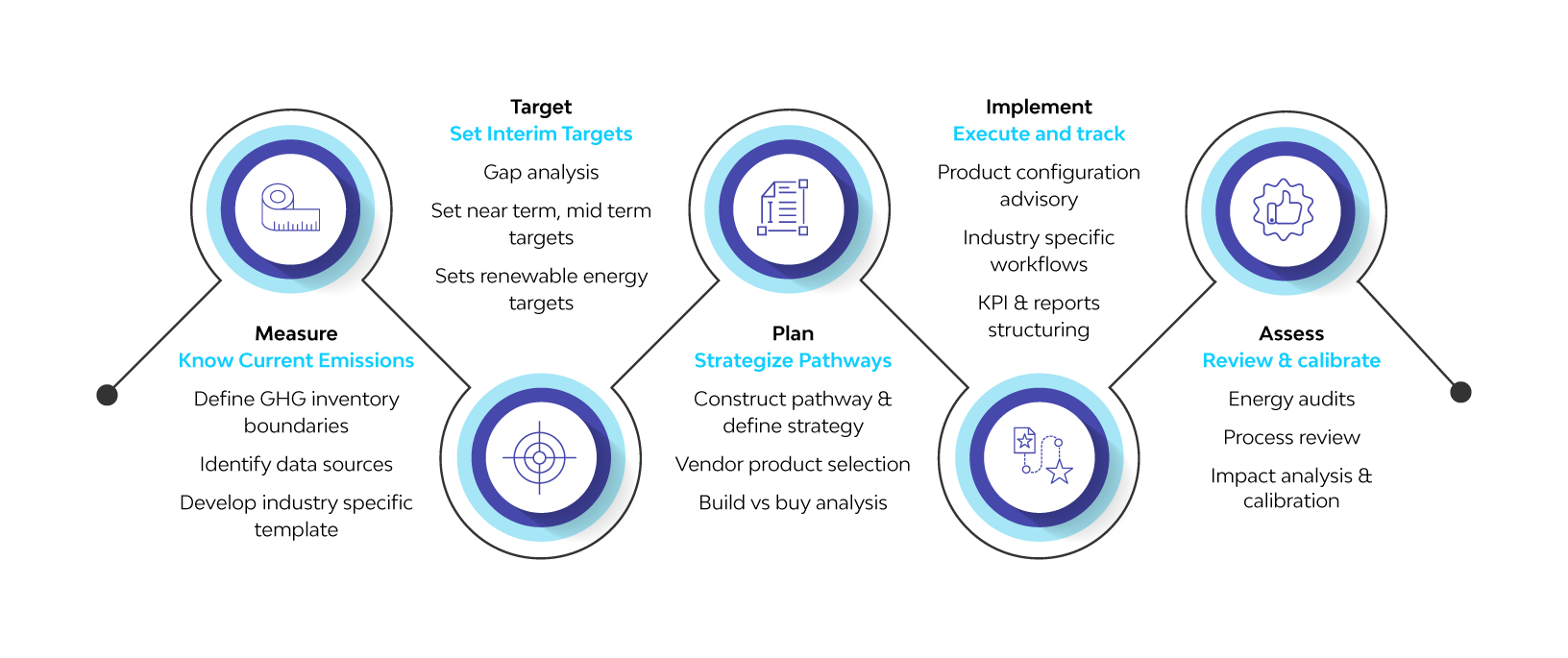
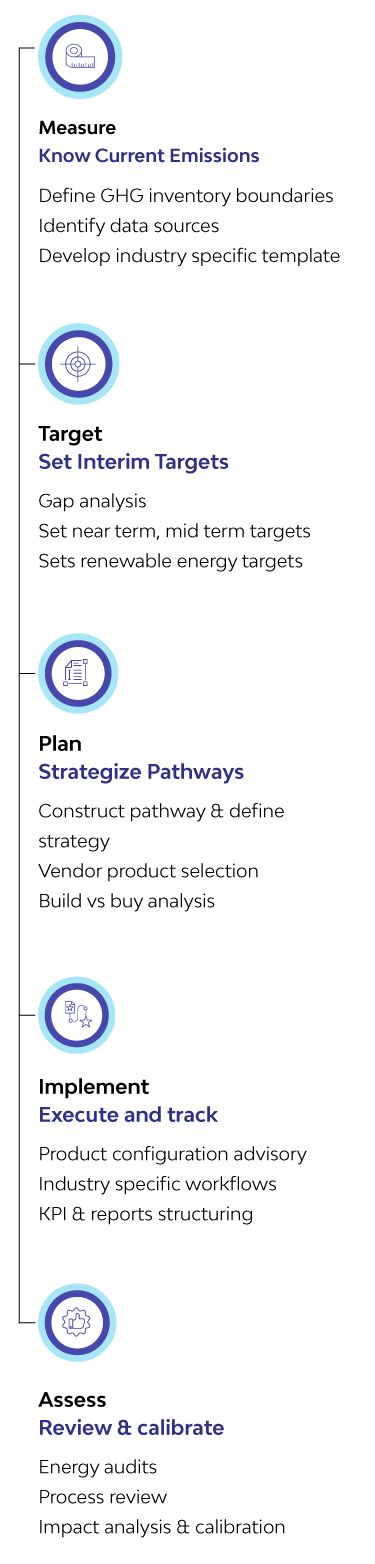
Net Zero Strategy / Roadmap
Manage Scope 1,2 and 3 GHG emissions throughout business processes & sustainability reporting
Emission Management
IoT based solutions for emission measurement, control and management

FlareDetection
PerimeterEmission Monitoring

Leak Detection
IntegratedSoftware
CCUS and Green H2
Leveraging deep domain knowledge and experience from the parent group for providing the following services:
Operations efficiency for emissions management and cost reduction
Cyber security of CCUS and Green H2 facilities
Green Facility/ Building
A fully integrated cloud-based solution to monitor and manage facilities’ energy consumption efficiently and cost-effectively.

Building Energy Management
- Digital twin of buildings
- Real-time energy monitoring
- Facility and equipment-wise insights
- Single asset management console
- Executive dashboard

Smart HVAC
- Monitoring and control of HVAC systems
- Real-time load-based HVAC optimization
- Predictive analytics for Equipment Health Index

Intelligent Audit
- Built-in ‘Intelligent Audit’ templates
- Weekly, monthly energy efficiency alert and audit reports
- Energy leakage indication and measures to control

Smart IEQ
- Indoor environmental quality measures
- Optimal thermal comfort maintenance
- Air quality checks and reporting
- Noise level monitoring and reports
Green IT
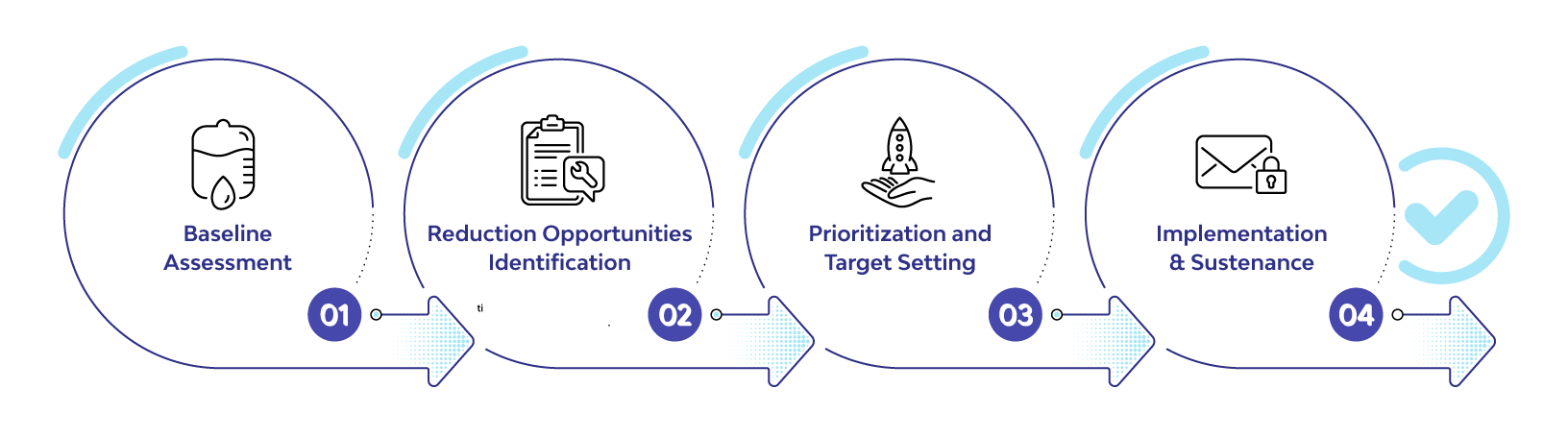
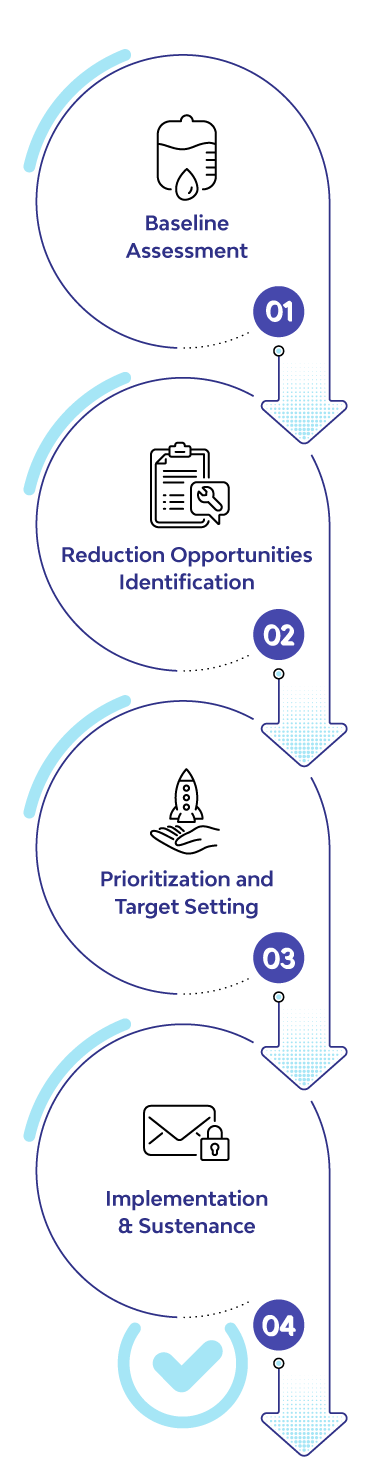
A phased approach to improve the Green IT index of application portfolio and reduce the carbon footprint associated with IT landscape.
Deep Application Analysis
- Get an at-a-glance summary of software health
- Improve the Green IT index of your application landscape
- Reduce energy consumption
- Reach Net Zero carbon emissions
- Identify IT cost savings
- Fully compliant with ISO5055 and 19515